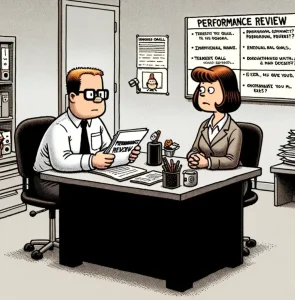
Middle Manager Burnout Prevention Through Organizational Design

Let’s be honest for a second. When we talk about burnout, we usually picture exhausted nurses, overworked teachers, or maybe that friend in tech who answers Slack messages at 11 PM. But there’s a quieter, more systemic casualty in the modern workplace: the middle manager. They’re the human bridge between strategy and execution, the ones who translate “vision” into “action items” while absorbing pressure from both sides. And honestly? They’re drowning.
Here’s the deal: we’ve spent years telling managers to practice self-care, take breaks, and “set boundaries.” But that’s like handing someone a bucket to bail out a sinking ship—while the hole in the hull keeps growing. The real fix isn’t individual resilience. It’s organizational design. If you want to stop the burnout epidemic, you have to change the system, not just the symptoms.
Why Middle Managers Are the Canary in the Coal Mine
Middle managers—directors, team leads, department heads—occupy the most stressful position in any hierarchy. They’re not fully in control, but they’re fully accountable. They have to enforce policies they didn’t create, while defending their teams against decisions they didn’t make. It’s a squeeze play that never lets up.
Research from Gallup shows that managers are actually more likely to experience burnout than the individual contributors they supervise. That’s not a coincidence. It’s a structural flaw. When your job is to absorb organizational anxiety, translate ambiguous directives, and still hit quarterly numbers—something has to give. Usually, it’s their health, their sleep, or their empathy.
And here’s the kicker: when a middle manager burns out, they don’t just suffer silently. They become less effective. Their team’s engagement drops. Turnover spikes. Customer satisfaction dips. It’s a cascade effect that hits the bottom line—but we keep treating it as a personal problem rather than a design flaw.
The Structural Culprits (Hint: It’s Not Just “Too Much Work”)
Sure, workload matters. But if you dig deeper, you’ll find three specific design issues that create the perfect burnout storm. Let’s unpack them, shall we?
1. The Role Ambiguity Trap
Most middle managers can’t clearly answer the question: “What exactly is my job?” They’re expected to be strategists, coaches, administrators, and crisis responders—often all in the same hour. This ambiguity is exhausting. When you don’t know where your responsibility ends and someone else’s begins, you default to over-functioning. You say yes to everything. You monitor everything. You never switch off.
The fix? Well, it’s not a job description rewrite. It’s about decision rights. Who gets to make what call? When a manager knows they have the authority to approve a project, hire a temp, or kill a failing initiative without a committee review, the mental load drops significantly. Autonomy is the antidote to anxiety.
2. The “Both Sides” Accountability Squeeze
Middle managers are often held accountable for outcomes they don’t control. They’re told to “improve team morale” but have no say in compensation. They’re asked to “drive innovation” but are penalized for taking risks. This asymmetry—responsibility without authority—is a known psychological stressor. It creates learned helplessness. And that’s a fast track to emotional exhaustion.
Organizational design can fix this by aligning accountability with control. If you want a manager to own a metric, give them the levers to influence it. If you can’t give them the levers, then don’t make them own the metric. Simple in theory. Revolutionary in practice.
3. The Invisible Workload
Middle managers do a ton of work that never shows up on a timesheet. Emotional labor. Conflict mediation. Translating executive jargon into actionable steps. Protecting the team from upper-management whims. This “shadow work” is invisible to most performance reviews—yet it’s often the heaviest burden.
Design fix? Make the invisible visible. Add a “leadership and coordination” category to performance metrics. Deduct time from their individual contributor duties to compensate for the human work they do. Otherwise, you’re asking them to do two full jobs—and then wondering why they’re exhausted.
Redesigning for Resilience: Practical Shifts That Actually Work
Alright, so we know the problems. Let’s talk about the blueprint for change. This isn’t about adding a wellness app or a mental health day. It’s about restructuring how work flows, decisions are made, and support is given. Here are some design principles that genuinely prevent burnout.
Flatten the Hierarchy (But Don’t Destroy It)
You don’t need to go full holacracy. But you do need to reduce the layers between the top and the front line. Every additional layer adds friction, miscommunication, and stress. Consider a “skip-level” policy where senior leaders occasionally meet with front-line staff—not to check up on the manager, but to understand ground realities. This takes the burden of being the sole information conduit off the middle manager’s shoulders.
Create “Buffer Zones” for Strategic Work
One of the biggest burnout drivers is context switching. A manager goes from a budget review to a conflict mediation to a product demo—all before lunch. Their brain never settles. Design your week to include protected blocks for deep work, with no meetings allowed. And I mean no meetings. Not even “quick syncs.” This isn’t about time management; it’s about cognitive recovery.
Distribute the “Manager” Duties
Who says one person has to be the sole coach, evaluator, and task assigner? In many modern orgs, we’re seeing a shift toward shared leadership models. For example, a team might have one person handling administrative duties, another focused on skill development, and a third leading project execution. This isn’t about stripping the manager’s power—it’s about preventing the single point of failure that leads to burnout.
Make Feedback a Two-Way Street
Middle managers rarely get useful feedback. They get performance reviews from above, but that’s often skewed toward “did you meet your numbers?” They rarely hear from their direct reports about how they lead. Set up a structured, anonymous “upward feedback” loop. This gives managers clarity on what’s working and what’s not—and clarity is a powerful antidote to the vague anxiety that fuels burnout.
A Table of Design Levers vs. Burnout Drivers
Let’s make this concrete. Here’s a quick snapshot of how specific design choices map to specific burnout drivers. Use this as a diagnostic tool.
| Burnout Driver | Organizational Design Fix | Expected Outcome |
|---|---|---|
| Role ambiguity | Define decision rights clearly | Less second-guessing, faster execution |
| Accountability without authority | Align metrics with control | Reduced helplessness, higher ownership |
| Invisible workload | Formalize coordination duties | Fairer performance reviews, less resentment |
| Constant context switching | Protected deep-work blocks | Better focus, lower cognitive fatigue |
| Isolation at the top | Peer coaching circles | Emotional support, shared problem-solving |
The Peer Support Network (Often Overlooked)
Middle managers are lonely. They can’t vent to their team because it undermines authority. They can’t vent to their boss because it looks weak. So they internalize everything. A simple, low-cost fix? Create a peer coaching circle—a group of 4-6 managers from different departments who meet bi-weekly. No agenda, no slides. Just honest conversation about struggles. This isn’t therapy; it’s structural support. And it works wonders.
What About the Individual? (And Why That’s the Wrong Question)
I know, I know. Someone will say, “But what about personal resilience? What about boundaries?” Look, those things matter. Meditation, exercise, sleep—all good. But here’s the uncomfortable truth: you can’t meditate your way out of a poorly designed system. Telling a middle manager to “practice self-care” when they have 47 unread emails and three conflicting directives is like telling someone to “stay calm” during a flood.
That said, there’s a role for individual agency. Managers need to advocate for their own structural needs. They need to say, “I can’t take on this project without giving up another one.” They need to ask for clarity when expectations are vague. That’s not weakness; that’s professional maturity. But the organization has to reward that honesty, not punish it.
Measuring Success: Beyond the Engagement Survey
How do you know if your redesign is working? Don’t just look at annual engagement scores. Track manager-specific turnover. Track the number of sick days taken by people in leadership roles. Track the quality of team meetings—are they energetic or zombified? You can even use a simple pulse survey every quarter that asks, “Do you feel you have the authority to do your job effectively?” That single question predicts burnout better than any complex metric.
And here’s a subtle one: look at the tone of internal communications. When managers are burned out, their emails get shorter, more curt, more defensive. That’s a leading indicator, not a lagging one.
The Cost of Doing Nothing (It’s Higher Than You Think)
Let’s talk money, because that’s what gets attention. Replacing a single middle manager costs roughly 150% of their annual salary when you factor in recruiting, training, and lost productivity. But the hidden cost is worse. A burned-out manager creates a ripple effect—their team disengages, and disengaged teams cost the organization about 34% of their salary in lost effort. Multiply that across a department, and you’re looking at a six-figure problem caused by a design flaw that could be fixed with a few policy changes.
So, the question isn’t “How do we help our managers cope?” It’s “How do